Showing posts with label JohanLee. Show all posts

Sunday, December 9, 2012

Signs and Wonders recap.


I personally think that Signs and Wonders was a great success this year, and I am sure that I am not the only one who thinks this way. It is all due to your participation and extra blog credits from prof. Leeper.

The theme for this semester was "beauty and longing", and I think that except one or two movies, movies this semester were perfect representation of that. I believe that it was a fortunate theme for this semester.

We've boldly started with "Senna", a documentary about a F-1 pilot, and ended with the "Enchanted April". The Midnight in Paris was a great delight from Woody Allen, The Song of Sparrows was a unique experience and perhaps the climax of this semester may have been "Malena". The discussion after these movies were definitely worth taking part of it. I think these were some factors that really showed what Signs and Wonders can do.


Something special for me this semester was that we were able to present two Korean movies: Poetry and Secret Sunshine. It was an opportunity for me to learn to appreciate and know more about the art of my home. I wish we will be able to show some more Korean movies.

However, my favorite movie of this semester's Signs and Wonders was "Lars and the Real Girl". It really showed me what good movie should be and can do. It was a pleasant surprise. Perhaps the best part was the discussion after the movie between Prof. Alexander and Prof. Leeper... it was not an everyday experience where you can listen these two particular great minds talking about movie, art, faith etc.


I encourage you to continue to come and take part of it. Watching good movies is not an ultimate purpose of Signs and Wonders; it is about watching good movies TOGETHER that makes the program get going.

Let me wrap up with couple questions for you.

What was your favorite Signs and Wonders movie this semester?
What theme would you like to observe next semester?

Saturday, December 8, 2012

Korean Wave

I was almost finished with my blog, but as you all know, electricity went off in the whole campus...
I am discouraged to write the whole thing again...but I will shorten what I had before...

Korean wave, which I have mentioned in my previous blog briefly, refers to the increase in the popularity of South Korean entertainment and culture such as K-pop, movies, drama series etc. in Asia and more recently in other parts of the world such as Europe, Africa, and Americas. In 2011, Korean wave added approximately $3.8 billion dollars of revenue to the South Korean economy.

Hallyu(Korean wave, started with the popular Korean drama "Winter Sonata" in 2002 and continues with Psy of Gangnam style. In case of "Winter Sonata", the set for the drama became the major tourist attraction, especially middle aged Japanese women. Also, Korean dramas are hugely popular in the Middle East. Korean dramas are screened several times a day. In case of  Iranians, they know better about Korean dramas than actual Koreans do. (No, I am not generalizing)

The interesting story is that when there was a territorial dispute between Korea and Japan, the prime minister of Japan publicly announced that he will stop listening to K-Pop. (He was known as a huge fan of it)

Egyptian K-Pop fans.

The question is how long would it last? or how far would it go?

Some experts believe that if Korea exported house hold electronics in 90's and cars past 10 years, Korean wave will be the major export for Korean economy. However, some critics believe that Korean wave will lack content that it has to provide more original stories, because fans are becoming tired of standardized contents.

Let's continue to observe how it unfolds.


Gangnam Style


Yes, Gangnam Style..

In the second half of this year, Gangnam style has been one of the most hot issues on and off line. Couple weeks ago, it became the most watched youtube video pushing away Lady Gaga.

Psy may became the most known Korea through this music, and the most successful Korean singer worldwide level making into the 2nd place of the billboard chart, and winning awards in America. His success in America basically means global success.

What is this phenomenon?

It is interesting to see how "unintended" effort led Psy to such fame, because there have been many Korean groups and singers that tried to expand their influence outside of Asia, ultimately aiming for America, but they were never there. However, Psy's "Gangnam Style" without any effort became the leader of "Korean Wave", which I will talk about in my next blog.

As a Korean, it is weird to hear Korean song playing in American radios. My friends in Russia tell me that even in Russian TV and radio, Gangnam Style is being played. It is even more weird to hear Huntington students singing it and dancing Gangnam Style.

I don't know how this is possible. I guess this proves the power of youtube.


Friday, December 7, 2012

Hollywood! Why not?


Yes, Hollywood...

In some presentations this week, and throughout the semester, Hollywood has been criticized for chasing the money. Also, it is easy to consider Prof. Leeper as an "anti-Hollywood", but is he really?

We have to remember that Prof. Leeper always makes the analogy of "junk food": "it is okay to eat them once in a while, but you shouldn't consume it everyday." I think it is a great analogy, because I also once in a while crave for McDonald's, but refuse to eat it everyday. I felt like some classmates were actively criticizing Hollywood, because they think that they have Prof. Leeper's full support. 

I would not condemn Hollywood like some classmates. If I expect art from Hollywood, that is a wrong attitude in the first place. If I seek beauty from Hollywood, I am a fool. However, for an entertainment, why not Hollywood?

Many people criticize "Product Placement", but in fact, I actually like to see them as long as they stay in Hollywood, because sometimes it is a shopping guide for me. There are actually some movies that I would watch just to think about what I might shop and wear in the future. I would not have tried "POM" juice, if I have not seen it in "the Greatest Movie Ever Sold". I tell you Pom is little expensive than usual juice that I would drink, but it tasted really good. ;)

Movies that are meant to be light should be taken lightly. For some people movie is an art, but some people movie is a business. Let it be... as long as, my conscious is still intact.

However, I think it is important in the first place to know and get use to "healthy" food, before you get use to "junk" food. Otherwise, you will crave for junk food everyday... 

I believe that criticism will never change Hollywood,. Let me reword that: criticism cannot change ANYTHING. With the mindset of Christ-like love towards Hollywood, may be we have a chance.


Monday, December 3, 2012

Tree of Life

Tree of life.. was a good movie. However, if someone asks me to recommend a movie, it probably would not be the first or second or third in my mind. The movie demands much, but does not give back much. Maybe it depends on a mood. Last night, I was pensive about the movie, but today as I try to write about it, I am realizing that I have not really received much from Malick to even organize my thought.

Not that I have no clue, but the pieces of puzzle that I have in my hands are not enough to even guess the grand picture. However, the movie is undoubtedly worth digging.

It was definitely an interesting and thought provoking movie. I think that my level of comprehension is not in such level to discuss about this movie. How can a kid, who does not know an alphabet, read a book? All he can do is stare at it.

Yesterday, I have stared at the movie.

Maybe next time, it will be my first time watching it.


Yes, exactly...


Monday, November 26, 2012

Quiz 2


Johnny Cash's "Hurt" music video was fabulous. After I have seen it for the first time in the class, I've watched it and listened to it over and over again while doing my animation assignments. Both the music video and the performance was powerful. I've listened to Trent Reznor's original version, and I have to say that it definitely had Reznor flavor in it. However, it was no comparison to Johnny Cash. 

I've heard that song for the first time, and it was my officially the first Cash music in my life. I've heard his name a lot, but I never really had an opportunity to lend my ears to his story.

The powerful moment in the video was Cash's presence in front of the opulent table, but he says, "you can have it all".

I think many people in the society strive to be at the peak of their mountain: the mountain of art, politics, education, church, media, business etc. People want to be successful. They want to be the influential figure in their own area. What for? Control? Fame? Wealth? I think opulence is the inherent ambition for the foolish hearts. 

I have no doubt that Cash had them all as one of the most influential musical figures. With all the success and trials in his life, when he says, "you can have it all". He really means it.


Monday, November 12, 2012

Secret Sunshine


What I loved about two films that we've watched in Signs and Wonders is that they left me humble.

There is a constant tendency of us as Christians to think that we know all the answers of the tragedy, because we know Jesus, who dies on the cross to carry our burden. Making Jesus as the "first kit" of any problems.

I do think that God is our helper, comforter, and able. I do believe in God, who is real in our lives that mends broken things and feeds us everyday. However, the problem is not in God, but in us.

"Come to me, all you who are weary and burdened, and I will give you rest." is like the favorite Bible verse that we refer to when we see people in difficulties or when we find ourselves in the middle of the storm and weariness.

However, we forget the verse after it: "Take my yoke upon you and learn from me, for I am gentle and humble in heart and you will find rest for your souls".

Yes, "take my yoke upon you."

It is very evident that God has his own way of working things out. In the case of this movie, where it is very easy to be skeptical about God, because of the main character's attitude, but it is clear that Ms. Lee is the closest person to God in the movie.

It is true that all the things that happened to Ms. Lee is the consequence for acting in front of people like she has things that she does not, which provoked jealousy. Ultimately, leading to the kidnapping of her son demanding ransom. Despite all the anger toward God, ironically, at the same time, she seemed to be most intimate with God, know more about Him than anybody else.

God's grace doesn't come easy. Before Peter was able to catch 153 fishes, he had fish all day and night. I think that is the mystery of relationship between God's sovereignty and our will. When we hit the limit, that is when God intervenes.

Sometimes, our prideful knowledge of Jesus limits us to really encounter him. It makes us lazy and oblivious about what it is to live a life of questioning and searching for answers.

Truth must set us free, but I am realizing more and more that the truth that I believe in bounded and restricted me. I guess what I held as a truth was not a truth, but a self righteous belief. Yes, there is a big difference between "truth" and mere "belief".

I thought that this movie was a tug of war between "truth" and "belief".

One thing that makes truth distinct from belief is that it cannot be comprehended, but it is always there just like that sunlight shining Ms. Lee's dark room.

I believe in full "freedom". Not only the freedom of my soul as we long for heaven, but also of my body and mind.

But there is a yoke that I have to carry, tears that I have to shed, the pains that I have to observe. In order to learn how endure  for the truth that I long for and to be freed from my beliefs.

If anything made sense in this blog...

Friday, November 9, 2012

Poetry is red...

This is my second time watching this movie. When I watched it for the first time I was fascinated with general themes of this art: the whole concept of poetry, truth, empathy... etc...

Having watched the second time, my thoughts have changed.

If someone asks me, what this movie is about. My answer is "This movie is about Pain"

First of all, I have to admit that Korean movie or audience in general appreciate lyricism. I do think that this movie portrays well the sentimental nature of Koreans.


Mija, the protagonist in this movie, says, "Red symbolizes pain" Throughout the movie, color red shows up very often. Especially, when it shows a girl, who committed suicide, after being repeated raped by her six classmates. However, this movie is not about six boys, who should be punished, but about two women in pain: Mija and the girl.

As you can see in the poster, there are red flowers besides the old lady. Also, in the picture of the girl who had committed suicide, the girl poses beside the red flowers.

I am not trying to tell you just the use of color red in the movie, but the role that pain takes place in the realm of art and especially poetry.

Without pain, I do not think that Mija was able to write a poem. She was searching for the poetic inspiration throughout the movie, and people around her always told her that the inspiration can usually be found somewhere close or in the moment of things. I guess the inspiration for her was a lot more closer than what people told her. She found it in her. The pain that came from the tragic story of a girl and her beloved grandson, and her inner struggle of morality: whether to take care of her grandson's future or to value the soul of a dead girl.

I think the most beautiful moment of the movie is when the lady is staring at a red apple.

Many of classmates used this photo for their blogs, but I would like to post it again to get across my point.


What does this mean? Why did the director wanted her to observe the red apple? Why not green? Why not banana? She even takes the bite out of it!

Red...apple

"Red symbolizes pain"

Yes, poetry is the observation of pain. Art itself is the observation of pain. That is not the ultimate goal, but without comprehending the pain, the beauty remains hidden.

The poetry teacher in the movie tells his students:

"How many times have you seen an apple? A thousand? Ten thousand? A million? Wrong! You’ve never seen an apple before. Not even once. Up till now, you haven’t seen an apple for real. To really know what an apple is.. to be interested in it, to understand it, to converse with it is really seeing it, Gazing at it for a while and observing its shadow… feeling its every curve, turning it around, taking a bite out of it, imagining the sunlight absorbed in it… That is really seeing it."

Let me reword that. Do we know pain? Have we seen pain? No, not until we observe it and taste it.

In short, art is... the way we digest pain, hardship, and suffering.

Monday, November 5, 2012

Of Gods and Men


What is this movie about? Martyrdom? Fidelity? Incarnation? Death? Freedom?

To be honest, I do not know what to write and how to start this blog, because no matter how well I try to write I won't be able to properly represent this multi-layered movie. I did not know what to expect from this movie, I had no previous knowledge, but the movie tackled universal question that everyone struggles with and Christians who choose to go through the small gate. This movie came very personal to me because my parents are missionaries. Sometimes people might think that being a missionary is a glorious and honorable thing, but actually it is far from those. It is a raw struggle with self and with God. One cannot be a missionary without tears, without kneeling down, without constant despair and loneliness...

"Love endures" are the exact words that brother Christian tells another brother who is in great fear of becoming a martyr. The question that the movie tackles is "is it God's will to become a martyr? or is it God's will for us to use God given freedom to leave for safety?"

Brother Christian, who is the leader of the Monastry, says, “Wildflowers don’t move to find the sun’s rays. God makes them fecund wherever they are.” Yes, endurance...

I do not know how to continue or to conclude this blog. There are so much in the movie.

I am still in process of digesting the movie. I will continue to watch this movie over and over again, and probably recommend to any close friends that I talk to.

One thing I have realized was one good movie is more powerful than an elaborate sermon or a heart-touching testimony. Let's never underestimate the power of what we are studying.

Definately in my top 5 list.


Wednesday, October 31, 2012

a valuable lesson learned

In the development class, I am currently working on storyboards. Since it I had to change one of the characters in the process, which means changing the whole story, I am little behind. It was difficult for me to figure out the story, even though I seemed to have clear direction. I had several decent ideas, but I could not land on any despite the fact that those ideas were workable. However, one simple question changed my situation.

Leeper came up to me and said, "what would you have done, if you saw the angel in nude taking a bath?" (yes, that is the story that I am working on)

I shouted, "Eureka!" in my heart...

That moment, I realized that my endeavor lacked authenticity. I was working on a story for the story sake. I was searching for something that I would read in a book. That was why I was thinking too complicated, and was never satisfied. I wanted something brilliant.

I did question "what would I have done"before Leeper questioned me, but my answer to that question was always "what I wanted to see me doing".

The reason that I am making big deal out of this is because I felt like this is a common trap that an artist can easily fall into.

I had to study myself first, before studying my characters and the story. Because I did not know myself well enough, I did not know how to develop MY characters and MY story.

That was the lesson that I learned today that will stay with me.

I would like to share a painting by Jean-Leon Gerome. Before Leeper came up to me and asked the question, I was searching for this particular painting that hoping that it could help me to further develop the story.


There was a woman named Phryne. She was accused of blasphemy and brought to the court.
The moment when her lawyer in her defense stripped her, 
the juries came to the verdict that she was innocent.
The reason was 'her divine beauty cannot be comprehended by earthly law"

Wednesday, October 3, 2012

Jesus in Korean flesh and culture

In the class, we talked about the images of Jesus, and how they are portrayed. Some artists depicted him as a Scandinavian white man with blue eyes or even as a black man. I don't really think the ethnicity matters, because when I pray in Korean, He answers me in Korea; when I pray in English, He answers me in English. He is transcendent.

Today I would like to introduce you some drawings that you have never seen before: "Korean version of Jesus" Sounds wild, right? However, when you see the drawings, you will be amazed how Jesus has perfectly assimilated to Korea.


Yes, I guess from the western perspective, this could be called as an "oriental Christmas". As you can see, every person in the drawing is wearing a traditional Korean costume. Also, since it was not allowed for men to be with women in the same room except the husband, the artist chose to put women surrounding the baby, rather than wise men and shepherds.

Intriguing?

The artist of this kind of drawing is Kim Gi Chang:


Kim Gi Chang was a Catholic, and actually he died only 10 years ago at the age of 87. He attempted to make Jesus indigenous Korean so that He could be more approachable and understandable for commoners who were uneducated.

Here are more of his drawings of Jesus and the Gospels:

Jesus praying in Gethemane while disciples and sleeping.

Jesus being tortured by in a old Korean way.

Cruxificion.

Ascension.

Not only the costumes help us to understand that this is taking place in Korea, but the artist also managed to portray mountainous Korean geography; especially, in the last two drawings.

The artist was criticized for Jesus wearing a costume that only noble people wore. Considering that Jesus was born in Nazareth and lived a life of a wanderer, some people believe that it could have been more believable if Jesus was more like a commoner.

Definitely, halos around "Mary" and "Jesus" does show Catholic influence.

I guess this could be very unexpected interpretation of Jesus, and yet very venerable. I think his interpretations are spectacular.

You have encountered Korean "Yesu". 

Here are some more Jesus from cultures that you are more familiar with:

Chinese version of Mary and baby Jesus

Chinese Jesus

Japanese

My fav. Indian Jesus.

Yes, Arab

Native Indian...


What's you favorite?


Monday, October 1, 2012

The Song of Sparrows


Insallah

An expression "insallah" was very often used in the movie. In Arabic, it means "Allah willing". It is not just an expression that they use as we use "oh my gosh", it is a word that pretty much can sum up the muslim perspective of life. I think this worldview of Islamic countries is very important to know in order to understand a movie made by muslims. Just like "English" is used in Hollywood movies", "insallah" is always there in Arabic movies.

I heard that it is very hard for athletes to play against Arab players, because they tend to be mentally stronger. If they win, it's "God willing"; if they lose, it's "God willing". They have nothing to lose. They just submit to the will of Allah. When you are playing against Arabs, you are not playing against them; you are actually playing against their principality.

I have already shared during the discussion how Ostrich was a symbol or foreshadowing of Karim(?). In the movie, they made very obvious that things happened for a reason. Nothing in the movie was a coincidence, but rather a soft hand of Allah leading Karim back to home, back to where he belongs. It wasn't his calling to work as a taxi driver in the big city, but "Ostrich" was his calling. No matter how hard he tried, he could not stand against "Allah's will". His need for money which later turned into greed definitely hindered him to get back home, but as the wall collapsed and broke his legs, Allah led him to the place where he was called to be.

It was interesting to see that how a field in front of Karim's house was barren, when he started to wander in the city, but from the moment he stayed home, the field became green and fruitful. Leaving his house more with fruits and guests than junk that he brought from the city. As he submitted to the will of Allah, his field became green, and his house got livelier and filled with fruits. He was blessed as he submitted to Allah.

I felt like what I have shared so far was the dictating theme in the movie, which was subtly executed in a heart-warming way. They did not try to teach us about Allah and their worldview, but they simply made an audience to be delighted by what they believe. I appreciate the art behind it, but it is truly intimidating.

Because they take delight in Allah, they were able to make him delightful.

Do we take delight in our Lord?
Only when we are delighted by our Lord, I believe only then we'll be able to delight others in the same way we are delighted.

Once again, it is a matter of authenticity.

Friday, September 28, 2012

Small Hands


I was torn between World of Glory and Small Hands. World of Glory had an impact on me, because seemed like I totally disregarded "communion scene"and the importance of it. I think the reason I belittled that scene was because I was a Christian, ironically. I thought I knew about it all. However, I am going with Small Hands, because it is the kind of animation that I'd like to make someday. It is emotionally very subtle. The subtleness of the movie submerged me into it. All the emotions in the movie was conveyed to me that I watched several times after the class. The fact "death" or whatever do set us apart. The harshness of the nature in the midst of a quiet ordinary day, but our instinct to continue to love and to preserve humanity with in us was the lesson for me. Lastly, the fact that we are all alone eventually. 

Wednesday, September 26, 2012

To judge or to discern

Makoto Fujimura, a Japanese artist, who we watched about during the class, said

"Artists are at the margins of society, but they are like the christmas shepherds,
 often the first to notice the miracles"
 
Makoto Fujimura

Is art necessary for the Christians? yes, I have to agree with Don Hudson.Without symbols we cannot get a taste of true beauty, because we are in the fractured world. In a sense Jesus himself was also a symbol of "For God so loved the world". However, Jesus transcended "the symbol", because He was God. He was the beauty himself. The reason that art exists. The purpose of art.

The reason that we need witness of "the miracles" like the shepherds is because we question. Because we question, we need to gather evindences. Each evidences will guide us closer to the truth. Maybe this is why Jesus called us to be "witnesses".

I think the reason that we have to understand and do art is because it is the front line of the spiritual warfare. Powerful art is inspired art. Art without inspiration is a narcissism. However, the word inspiration contains the word "spirit". The world inspiration in Korean sounds like "Young Gam". The word "Young" in Korean means "spirit". Even in Russian, the word inspiration "Vdochnovlenie" contains "doch" which means "spirit". That is why I call art as the front line. Art is the most spiritual place of humanity, and this was the reason that I had changed my major to DMA from International Relations.

I believe that art is the world of spirituality. It is the expression of our essence: who we are and where we are from.

However, as humans we express something "fallen(evil)" at the same time we express our longing for "beauty(holy)". This is what I love about the art. It requires discernment, not judgement. Discernment requires wisdom, in other words, the knowledge of God. Art trains us to be better Christians. Art helps us to realize that we are in the midst of the spiritual warfare within us and in the spiritual realm that we tend to be oblivious about.

How can church be excluded from this? It would be like putting on the "armor of God", and not going into the battle. Armor of God is not a fashion that enchants us as we look ourselves in the mirror.

The beauty has to be fought for. "The kingdom of heaven has been forcefully advancing, and forceful men lay hold of it." (Mt 11:12)


Saturday, September 22, 2012

Pablo Picasso

Pablo Picasso.

Leeper briefly talked about him in the class, and he also showed up in the movie that was presented in the Signs and Wonders.

To be honest, I don't really understand much of his works. Looking at his works is like listening to classical music: I appreciate it, but I don't get it. It is like there is a sensation, but I don't really understand what caused the sensation in me. I guess it is like eating something without knowing the recipe.


"First Communion" is the painting that Picasso completed when he was 16. As you can see above, it is impressive for a teenager to have drawn something so delicate and mysterious. Yes, Picasso was a genius.

Here is the problem. If you can draw something like "First Communion" when you are 16, no one will doubt that you are a genius. However, if you continue to draw like that when you become an adult, you are no longer a genius, because the drawing is no different from the others. Any professional artists can draw like that. For young Picasso "First Communion" was a milestone, but for Picasso, who is no longer a child, it becomes a mediocre.


Diego Velazquez was Picasso's idol. Picasso wanted to become like him. In the early works of Picasso, he was heavily influenced by Velazquez, and Picasso did make a lot of reference to the works of Velazquez. However, Picasso became a genius not when he was able to perfectly imitate Velazquez, but when he was able to destroy everything that was set before.

Las Meninas by Velazquez
Las Meninas by Picasso

As you can compare two works above, Picasso rejected the perspective that was developed and appreciated since the Renaissance, and decided to set a new perspective that none have experimented before. 

A child drawing like an adult is brilliant, but an adult drawing like an adult is boring. However, an adult drawing like a child might be interesting. As Leeper mentioned Picasso's quote in the class, "At 15 I painted like Velazquez, and it took me 80 years to paint like a child."

I believe that, for Picasso, his paradigm shift was not triggered by his effort to be different or to bring change, but I think it was a matter of "authenticity", in other words, "being truthful" to his own expression or taking full responsibility of his own intention.

Pablo Picasso did say, "art is a lie that makes us realize truth". However, I believe that only "truthful lie" can do its job.

For the side note, going back to the main point of my previous blog..maybe better way to put his quote is "art is a reflection that makes us realize truth".


Tuesday, September 18, 2012

Illusion or Reflection

Last week, Leeper briefly talked about Renaissance and Catholic art pieces.

His take on Enunciation and Magnifica was very fresh to me. I had nothing against Catholic church take on Maria, but I never really have appreciated enough about a virgin being chosen by God. It is something very beautiful I guess... Renaissance did depict Jesus in many ways. Most of the times, Jesus was portrayed as a baby Jesus or as a suffering flesh on the cross.

From my understanding and interest in history, Renaissance was based on the philosophy of Dante, who believed that salvation came from "self-awareness", and Beatrice in his "Divine Comedy" was the pinnacle of "self-awareness". Starting that point on, many artists inspired by Dante started to draw their own Beatrice. Botticelli, the painter of "The Birth of Venus", was one of them.

To go back more, another philosophy that not only shaped Renaissance but the Western culture as a whole was Plato, who asserted the separation between the spiritual world and the physical world. To be more specific, Plato defined the physical world as an illusion. He basically belittled the reality. It is a fact that the Western world is heavily influenced by Greek philosophy, and even Christianity (for example, monks causing pain on themselves.) I do believe that many Christians nowadays tend to hate there physical body, and value only their own spirit.

I am not trying to downplay western civilization or the Renaissance. In fact, I am a huge fan of Renaissance art, and with all my heart I do appreciate western cultures as much as I love my own. Actually, I believe that the boundary between the West and the East is becoming more uncertain nowadays. We can blame it on globalization or thank globalization. 

However, my point is that I do think it is false to believe that this reality that we live in is a mere illusion or "phantasma". 

I believe that there is a meaning behind God separating water from water in Genesis 1. As water reflects objects, the heaven(spiritual world) and the earth(physical world) were made to reflect one another. I believe that it would be too much to say that one is less than the another. Yes, sin made us to fall. Yes, the earth has failed and it is tinted by our sinful nature. However, consider this. God justified us with the blood of Jesus Christ and already made us glorious(Romans 8). The spiritual and physical world are not separate. Word integration might be superfluous in this context, since they've been one. Those two worlds are interdependent.

Considering this, the responsibility of artists increases, because we have to capture the reflection of heaven and share with the others so that they could be delighted.

As faith is confidence in what we hope for and assurance about what we do not see...
let us reflect heaven and let heaven reflect us... Let us live by faith alone.

Saturday, September 15, 2012

Spalding is balding..


And Everything is Going Fine.


To be honest, I am not very fond of monologues. Especially, monolgues in English.

English is not my first language. It is hard for me to catch English subtleties and humor, which is a huge a part of monologue.

However, I was very interested in watching this movie, not only because I get 2 blog credits, but also because I wanted to learn more about storytelling. Most importantly, I was intrigued by a man who enjoyed to tell stories. It was Spalding Gray that interested me.

In Korean philosophy, there are 5 things that composes life:  joy, sadness, anger, fun, love. I think the reason that a person sitting in front of a table with a cup of glass was able to reach out to so many people was because he talked about joy, sadness, anger, fun, and love. However, that is not it. Who cares about someone talking about their own life. Why do I have to pay money to listen to someone having a therapy session for himself?

I believe that it was his longing for childhood and question of death that drew people in. I think childhood and death were the main topics of his presentations.

Have you ever looked at your albums of when your a baby or a little boy or a girl. Every time I spend some time to go though my pictures and recall moments of my childhood or look at my photos with my parents' commentaries, there is both sadness and joy in my heart. Joy, because they are funny. Sadness, when I realize those time of "purity" will never come back, and the fact that my parents became older as I have gotten older. Then I realize "Oh.. nothing lasts forever". With smooth transition, I start to ruminate about death.

Childhood/birth and death. They might be antonyms in dictionary, but by nature they seem to stand right beside each other. Life is a moment, and artists we attempt to catch the beauty of this life in that blinking eyes. What do I want to see? What do I want to feel in that moment called life.

"Emmanuel" what a comforting name that is...

 Throughout the movie, I felt futility from Spalding Gray, and after the movie Leeper said that he actually committed suicide. I was not surprised. My intuition was correct.

Spalding Gray was heavily influence by his mother, who believed in Chistian Science. Maybe that is why "And Everything is Going Fine". Maybe Spalding Gray wanted to say, "And Everything is Going Fine...Not"

Maybe storytelling was his own way of penance.

Tuesday, September 11, 2012

Il Racismo


If the first flag didn't catch your attention, hopefully and probably, the second one did its job.

Today, after having watched a lovely short movie "the lunch date", I started to think about racism. The question that I had imposed on myself was "Could anyone truly not be a racist?"

First, a definition of racism is:

"a belief or doctrine that inherent differences among thevarious human races  determine cultural or individual achievement, usually involving the idea that one's own race is superior and has the right to rule others."

The conclusion that I have come to today is that everyone is a racist in one way or another; especially, if you are from a post-industrial country. I just feel like many people think that political correctness exempts them from being racists. LOL If you are truly not, my apologies... I do believe in exceptions.

Well, to explain the first flag before I share my thoughts... If the Jews and the Western world would be deeply offended by Swastika. Asians would be appalled to see the first flag in the public. The name of the flag is "the Rising Sun" that Japanese carried around during the World War II as a pride of their imperialism. If Swastika reminds Jews the atrocities that Nazis had committed to them, "The Rising Sun" reminds Asians what Japanese had done to them. However, the second case is not well know as the Holocaust event. It is probably because Asians are not as rich as the Jews to impose influence on the rest of the world or Japan has great lobbyists in the U.S.

Unlike Germans, Japanese never have repented from World War II. "Grave of the Fireflies" is the great example of that. Japanese choose to romanticize the war and make their own people to believe that they were the victims. You'll never see Swastika in any sporting events, but if you watch and game with Japan, you will see that flag 100%. What a irony...


I didn't start writing this blog to prove my point that I have made today or to talk about world politics and condemn countries that consider itself as superior, but to apply this to what we do as artists.

One musician said in an interview, "I have my own tastes of music, but I appreciate all styles of music from country music to dance music. If I start to favor one, there is no difference from racism".

I do agree with this musician. If we are just an audience, we might have a right to be "art racists", but as long as we are artists, we should attempt to dig deeper and become a good reader. However, it would be very important to discern what is art and what is fake art. I do believe that there are many wannabe arts in our media. Because just like Satan reveals himself as an angel of light, many garbages borrow the form of art and beauty.

Also, as Leeper (took me a year and a half to call him only by the last name despite of his permission..not an Asian thing I must say) told us in the very beginning of the course through the reading, our purpose is to delight with art. While thinking about racism today, I thought that if I try to impose my idea on someone through art, I am not doing art, but it would be propaganda or an expression of another form of racism. 

I have been wrestling with the concept of "delight" from the first reading. The question that I had until the the reading awhile ago was, "how should a baptized artist's baptized art should be different from non-baptized art or a non-baptized artist?" However, my question has changed, "How can I delight my audience from different race, religion and background as a Christian while preserving the restoring power of the cross?"

Sometimes we try to display our arsenal of thought or ideas and impose them through art like an arms race during the Cold War when the U.S and Soviet Union competed with each other.

Lev Tolstoy said, "the purpose of the art is to disarm". Maybe that is the role of delighting.

Let's disarm ourselves first FOR OURSELVES. Let's express what we feel, rather than what we ought.
Let's be delighted everyday :)

Flowers for you S2


Tuesday, September 4, 2012

Silence

Let me quickly introduce myself. I am Johan Lee, and I am a Korean, but I have lived most of my life in Moscow, Russia. My parents are missionaries. I am currently studying Animation, and I am a junior. I am taking this class now, because I am a transfer student. I am actually glad to take this class now, because I appreciate art more than before.

The reason that I am studying animation is because of my love for humanity. I feel like art is the pinnacle of humanity. I believe that art is a higher expression of history and literature. Yes, for me, animation is another form of art, rather than mere entertainment.

Well, I enjoyed today's discussion and films that we've watched, because all those films showed how oblivious we can be. I think that starts from unwillingness to let opinions go. Even in my walk with Christ, I am fearful to define anything, because the moment I start to do that, there is no space for something new about him.

A highly acclaimed Korean-American artist Paik Nam June(look him up, he's pretty genius), who is famous for "video art" once said, "something new is more interesting than the truth". I don't fully agree with this, but I think there is something to think about.

Paik Nam June's famous work

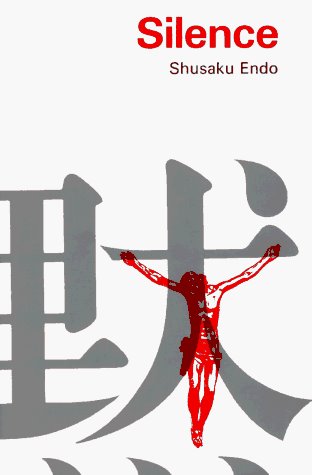
Recently, I've read a Japanese novel "Silence" by Endo Shusaku. This novel is about a Catholic missionary in Japan in 17th century. 17th century was a period of time when Japan accepted Christianity, but also it was a time when they started to fiercely persecute Christians. 

The fact that a Japanese wrote something that has to do Christian morals and dilemma itself is interesting enough, because only 1-2% of Japanese population is Christian.

This book is very relevant to our discussion, because the biggest dilemma that the missionary goes through is "Why is God silent in the midst of persecution? Why is He allowing this kind of suffering?"

The climax of the story begins when Japanese soldiers would  stop torturing Japanese Christians only if the missionary gives up his faith.

I won't ruin the book for you, but he later realizes that God did not eliminate suffering, but he chose to suffer with us. However, the steps that led him to that conclusion is hard to digest. It can be very controversial. I really recommend this book to each one of you. Look this up, you will be drawn as I was.


One thing that I started to understand recently is that everything I believe and cling onto will be crushed or challenged regularly as I read, watch, encounter... Especially, when it comes to dealing with people from different culture or circumstances, I have to give up what I know and learn how to approach them FROM them. It excites me, because that is how people mature and learn how to communicate with the others better. I guess it is a form of humility.

If you jot down main characters from Dostoevsky's work. These are some people that you will find: tax collectors, prostitutes, idiots, criminals, adulterous woman...etc. Do these people ring any bell to you? Yes, these were people that Jesus had fellowship with. Dostoevsky also lived among them as he wrote his novels. Dostoevsky understood this people. Maybe Dostoevsky was the most Christlike person ever in history. 


I also wish to understand them, not as someone who knows the truth or better, but as a fellow human. If art is just an expression of who I am and what I like, it is no different from masturbation. Maybe art is to share the pain of humanity, and turn it into something gold.


I would like to end with Michelangelo's quote, "I am still learning."