I also watched some of the behind the scenes that was posted to YouTube. Although some of the special effects "tips" that they gave were some that I already knew before (e.g. make sure you level your tripod!), it was interesting to see the other tricks they used, such as replacing the lighting in original fixtures with different bulbs and keying out the spill from the green-screened light on the computer screens. I know I shouldn't be surprised with some of the special effects with all our current technology, but I am anyway. Now I'm just anxious to start putting in into practice!
Showing posts with label EricLuce. Show all posts
Friday, December 7, 2012
Meridian
I was intrigued by the Meridian video series that we began to watch in class on Tuesday. The rest of the film was available to watch, and the story held my attention to the very end. While the concept of time travel is certainly not a new idea, this method was a little different, and the visual effects were good as well.
At times I did think the story was a bit overdramatic, but that may just be a characteristic of video created for the internet. Just like with web comics—film can be created and distributed without the need for a distributer who may try to change and limit your film's ideas. I'm reminded of Dr. Horrible's sing-along blog as another example of a film that isn't limited by all those risk-avoiders who can never approve anything different.
I also watched some of the behind the scenes that was posted to YouTube. Although some of the special effects "tips" that they gave were some that I already knew before (e.g. make sure you level your tripod!), it was interesting to see the other tricks they used, such as replacing the lighting in original fixtures with different bulbs and keying out the spill from the green-screened light on the computer screens. I know I shouldn't be surprised with some of the special effects with all our current technology, but I am anyway. Now I'm just anxious to start putting in into practice!
Thursday, December 6, 2012
Christmas = Movies?
Everyone is writing about Christmas movies, so I might as well share a few of my favorites that haven't been mentioned yet.
The one movie that my family watches every year is Polar Express. I remember the first time watching it—I debated in my mind the entire movie if it was live action or animated. By the time we watched the special features, I don't think I had decided. I also remember being fascinated by the technology that was used to create such an effect (this was long before my interest in film). I know that Leeper has complained about it before, but as hard as I try, I can't bring myself to say anything bad about it! When I go home next week, I'm pretty certain that we'll watch it together as a family again. It's just one of those traditions that I don't know we could break!
My other personal favorite Christmas movie is Elf. I never actually owned it until last year, which is why I'm probably more ecstatic about it than most people; I was rarely able to see the whole thing because it I would always see it at a friend's house where we never had time to finish. Nonetheless, you can't deny that it's one of those classic movies that will hold its reputation for a long time—maybe even as long as some of these other Christmas classics currently on the blogs!
Side note about Christmas movies....does anybody know why there always seems to be movies released on Christmas day? I have always found that strange, because it's the only time of the year when they release new movies that's not always a Friday. It's also interesting because it's a rare that "Christmas" is used rather than "Holiday". I remember seeing only one movie in the theaters on Christmas day, but it was the Nativity Story, so it didn't feel too weird. I just imagine Christmas day as the day you spend with your family, not ideal for visiting the theaters, but maybe I'm wrong?
The one movie that my family watches every year is Polar Express. I remember the first time watching it—I debated in my mind the entire movie if it was live action or animated. By the time we watched the special features, I don't think I had decided. I also remember being fascinated by the technology that was used to create such an effect (this was long before my interest in film). I know that Leeper has complained about it before, but as hard as I try, I can't bring myself to say anything bad about it! When I go home next week, I'm pretty certain that we'll watch it together as a family again. It's just one of those traditions that I don't know we could break!
Side note about Christmas movies....does anybody know why there always seems to be movies released on Christmas day? I have always found that strange, because it's the only time of the year when they release new movies that's not always a Friday. It's also interesting because it's a rare that "Christmas" is used rather than "Holiday". I remember seeing only one movie in the theaters on Christmas day, but it was the Nativity Story, so it didn't feel too weird. I just imagine Christmas day as the day you spend with your family, not ideal for visiting the theaters, but maybe I'm wrong?
Art and Fear
I'm really surprised that no one has yet to blog on our Art and Fear book, but that may be because very few people have actually read it. This book is probably the best thing I've had to read all semester—for this or any other class. It's written in such a way that makes you feel like the author is talking directly to you in your own situation. There is incredible insight to be found in the words of wisdom shared there.
Before coming to Huntington, I never really saw myself as an artist. Art has always been defined as something drawn, painted, carved/molded, etc. In reality, art is actually a form of self-expression, which can be shown in many different ways.
When people go to art galleries, they wouldn't be surprised to see photographs among paintings for example. In the same way, you would expect that people could easily see films as art. After all, a film is just a bunch of pictures, but with audio attached to it. Yet you hardly ever hear people talking about cinematography when they walk out of a movie theater—unless they were watching some nature documentary, or they're a film student.
This semester I've been able to see that there is an extremely wide scope to the things film can capture, making it every bit an art form which fits so well into the book. I still may think that animators will get more out of it, simply because it is more focused on the created art (by which I mean drawings, paintings, etc), rather than other forms like film, which require a slightly different technique. Nonetheless, I love the book, don't even think about not reading it
When people go to art galleries, they wouldn't be surprised to see photographs among paintings for example. In the same way, you would expect that people could easily see films as art. After all, a film is just a bunch of pictures, but with audio attached to it. Yet you hardly ever hear people talking about cinematography when they walk out of a movie theater—unless they were watching some nature documentary, or they're a film student.
This semester I've been able to see that there is an extremely wide scope to the things film can capture, making it every bit an art form which fits so well into the book. I still may think that animators will get more out of it, simply because it is more focused on the created art (by which I mean drawings, paintings, etc), rather than other forms like film, which require a slightly different technique. Nonetheless, I love the book, don't even think about not reading it
Wednesday, December 5, 2012
PowerPoint's are NOT stupid
In TJ's post about PowerPoints being used in yesterday's class presentations, he complained that it was not an effective tool for teaching/learning information. I have to disagree. With specific reference to my history class this semester, PowerPoints are the only way I am able to follow the instructor. Without an outlined plan of how the lesson is being taught, it's much harder to understand how everything fits together.
I don't mean to say that TJ's presentation was bad, but as another example, it was harder to follow than when the presenter visually showed me where he was going. Good speakers can still receive good feedback and understanding from the audience without a PowerPoint, but there is certainly nothing wrong with an supplementary visual to help present information.
Which leads me to another important factor that is easily forgotten—the contents of the slideshow matter! If you type out everything in paragraph form and read to the audience, we would consider that a bad presentation. Matt spread his points across multiple slides so that we could enjoy an amusing picture while he explained his research. And as far as students taking notes from PowerPoints, that's not the presenters fault! I find myself takes less meaningful notes without a PowerPoint, especially when the teacher often gives completely useless information that's hard to distinguish from the important stuff when taking notes. (cough-cough: history again...)
Lastly, please understand that I didn't hate TJ's presentation, I simply felt the need to explain why I will be showing an accompanying slideshow during my presentation tomorrow. It's not cliche, it's simple and practical
Saturday, December 1, 2012
Passing Hearts
Although I was unable to stay to watch this film in class last Thursday, I saw a couple of other blogs about it that convinced me to try to find it. Therefore, if you also missed said film, watch it right now:
Many of the short films we watch in class have such a different purpose than any other video that I tend to watch. I don't want to say that they lack purpose, but their purpose is either much more defined, such as in a film like this where the story is not nearly as important as the emotion conveyed. I especially enjoyed observing how this is accomplished through many components of the actual production, such as music and pacing.
This is one of the main reasons why I enjoy making film, but so far it's not something that has really come up because it is kind of a generalization that most of us already knew when entering this program. Filmmaking takes an incredible amount planning and preparation that is hardly ever appreciated by the audience—especially in the mainstream industry. For this reason, I don't believe any of us should be unsatisfied if we don't make it big in Hollywood. It seems that our work will be even more appreciated when targeted to the people who understand it. But maybe I'm wrong—any other ideas?
Many of the short films we watch in class have such a different purpose than any other video that I tend to watch. I don't want to say that they lack purpose, but their purpose is either much more defined, such as in a film like this where the story is not nearly as important as the emotion conveyed. I especially enjoyed observing how this is accomplished through many components of the actual production, such as music and pacing.
This is one of the main reasons why I enjoy making film, but so far it's not something that has really come up because it is kind of a generalization that most of us already knew when entering this program. Filmmaking takes an incredible amount planning and preparation that is hardly ever appreciated by the audience—especially in the mainstream industry. For this reason, I don't believe any of us should be unsatisfied if we don't make it big in Hollywood. It seems that our work will be even more appreciated when targeted to the people who understand it. But maybe I'm wrong—any other ideas?
Monday, November 26, 2012
A Comparison
Over the Thanksgiving break, I was able to watch 2 movies with my family. Although the debate wasn't very vocal, it was clear that we greatly disagreed about which was the better movie for different reasons. This class influenced my views when watching both films, which is why I'd love to share this experience via this blog...
The first movie we watched was The Mark (2012). If you haven't head about it yet, it will be hard to avoid it because it's a Christian film. I will say that I enjoyed it more than some of the other discipleship-themed Christian films because The Mark begins to tell the story of the Tribulation, which is an incredibly action-packed story. Still, besides the poor quality of the graphics and special effects, the story was still incredibly focused on a conversion message. It was also disappointing to see how it failed to live up to the hype of its trailer. The film was advertised surrounding a chip implanted into humans—a revolutionary new technology that would change the world. The purpose or capabilities of the chip were really not revealed. As soon as the rapture happened in the film, the entire storyline changed to a mere attempt to survive. Not to mention that the story wasn't resolved—even a little bit. The movie ended with a trailer for the sequel.
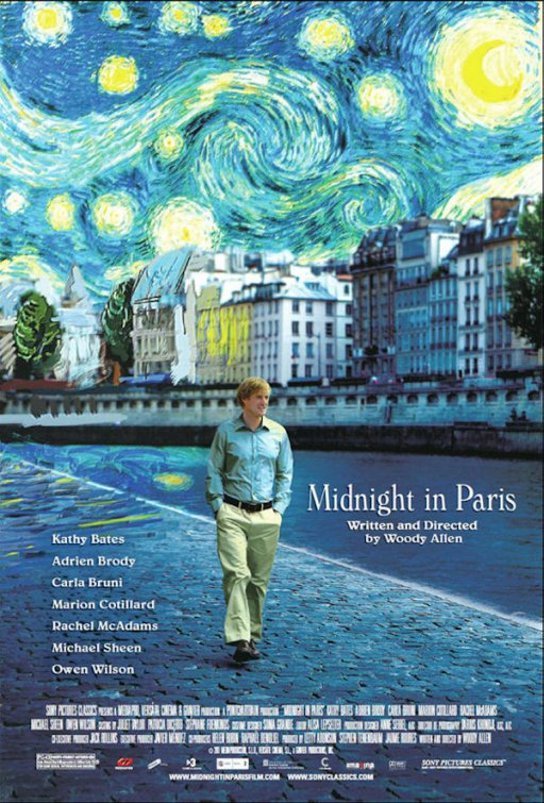
The next night, I convinced them to show Midnight in Paris, a film I missed being able to see at Signs and Wonders several weeks ago. My mom lost interest after the first 2 minutes. She complained that they had only shown shots around Paris, with a whole day passing before introducing any characters or plot. My little brother was mainly only engaged throughout the film because I turned on the French subtitles for his French homework, and my dad claimed to have enjoyed it once it was over, but I can't verify that he was awake the whole time; he knew I thought the film was good. A story like this one was well developed with a much more subtle message of contentment. This allowed it to be appealing to more people who might even recommend it to friends after seeing it.
In the end, I was very satisfied with the contentment theme in Midnight in Paris, especially since it was Thanksgiving weekend. I'm also pretty sure that I will watch the next Mark movie anyway, but it certainly won't be on my list of favorite films.
The next night, I convinced them to show Midnight in Paris, a film I missed being able to see at Signs and Wonders several weeks ago. My mom lost interest after the first 2 minutes. She complained that they had only shown shots around Paris, with a whole day passing before introducing any characters or plot. My little brother was mainly only engaged throughout the film because I turned on the French subtitles for his French homework, and my dad claimed to have enjoyed it once it was over, but I can't verify that he was awake the whole time; he knew I thought the film was good. A story like this one was well developed with a much more subtle message of contentment. This allowed it to be appealing to more people who might even recommend it to friends after seeing it.
In the end, I was very satisfied with the contentment theme in Midnight in Paris, especially since it was Thanksgiving weekend. I'm also pretty sure that I will watch the next Mark movie anyway, but it certainly won't be on my list of favorite films.
Monday, November 19, 2012
Kooky
Signs and Wonders has always been interesting. Why don't more people come?!?! Yesterday there was a combination field trip, exercise, and puppets!
The children's film shown was very entertaining, even though it was a very different style of pacing. If there's one theme that I can say I've learned so far this year, it's that movies can truly be made out of anything, and Kooky* did a great job of making the characters come to life in the middle of a wonderfully innocent story about a boy who just wants to be reunited with his stuffed animal.
A very interesting point that was only brought up briefly in the discussion I want to talk about more here. As the 2 main characters are driving along, Kooky sees two dragonflies being intimate with each other. After being scolded for leading them into the awkward situation, Kooky asks "If we don't talk about it, then how am I supposed to know what I see?"
This was certainly not the theme of the film, nor did they really mention it again, but I think it's very important to understand, and reminds me of the discussion we had after the "When Life Departs" film. There is a certain point when sensitive subjects need to be introduced to kids, if only so that they don't develop an inaccurate understanding. There are plenty of other sources that would give you more detailed analysis about when and how this might be done—I'm not the expert on that; that's not the point. The point is, that it does matter. I know a girl in high school who told the story about how she became a mother much too early because her parents hadn't spoke to her at all about such things.
When it comes to the question of whether or not you should expose them to other beliefs, my personal opinion is all about timing. I believe it's very important to develop such a good relationship with children that they can comfortably ask the hard questions that will lead to better discussion. In that case, it's better to tell them your belief early, so that you can later explain that other people believe differently. This seems to be the only way to instill in them a solid belief they will eventually accept as their own.
The children's film shown was very entertaining, even though it was a very different style of pacing. If there's one theme that I can say I've learned so far this year, it's that movies can truly be made out of anything, and Kooky* did a great job of making the characters come to life in the middle of a wonderfully innocent story about a boy who just wants to be reunited with his stuffed animal.
| *note picture for correct pronunciation |
This was certainly not the theme of the film, nor did they really mention it again, but I think it's very important to understand, and reminds me of the discussion we had after the "When Life Departs" film. There is a certain point when sensitive subjects need to be introduced to kids, if only so that they don't develop an inaccurate understanding. There are plenty of other sources that would give you more detailed analysis about when and how this might be done—I'm not the expert on that; that's not the point. The point is, that it does matter. I know a girl in high school who told the story about how she became a mother much too early because her parents hadn't spoke to her at all about such things.
When it comes to the question of whether or not you should expose them to other beliefs, my personal opinion is all about timing. I believe it's very important to develop such a good relationship with children that they can comfortably ask the hard questions that will lead to better discussion. In that case, it's better to tell them your belief early, so that you can later explain that other people believe differently. This seems to be the only way to instill in them a solid belief they will eventually accept as their own.
Monday, November 12, 2012
Secret Sunshine
The film last night was quite a surprise. I expected something much more uplifting than Poetry, yet instead I was shown a film that seemed to almost constantly trick you about what it was about! I'm not complaining, because it was still a very brilliant form of storytelling. I suppose it was simply the cultural difference that I'm not used to; this filmmaker got all the logistics out of the way so that he could tell a different kind of story. We're so accustomed to stories that may focus on only one type of thing, but Secret Sunshine ran them all together to show a larger picture.
Theological ideas brought up in this story truly provide something to wrestle with. We discussed the symbolism of Mr. Kim representing God in the story, and there are plenty of great instances in the story where that is an amazing symbolistic idea that even makes sense, but struggle with it. I'm sure that I'm just imagining it in the wrong way, but for some reason I can't accept the idea that Mr. Kim's character especially is supposed to represent God in a human form for her to more closely relate to Him. Isn't that supposed to be Jesus?
I understand that we, as Christians, can represent Jesus by being loving and compassionate especially to those who are hurting, but Mr. Kim never acted in that way. He only began pursuing her for romantic reasons, and at the end simply becomes the really good friend who can hold a mirror for those who have a problem getting their hair cut in salons.
Overall, I appreciated the idea of sunshine, which I can more closely relate to the way God seems to operate. The sunshine provides light (which leads to a whole other symbolistic road I won't travel now) and power for plants to grow. It is persistent in the way that it comes everyday to awaken the world, and we generally believe that it still exists, even when we can't see it through rainy days.
Theological ideas brought up in this story truly provide something to wrestle with. We discussed the symbolism of Mr. Kim representing God in the story, and there are plenty of great instances in the story where that is an amazing symbolistic idea that even makes sense, but struggle with it. I'm sure that I'm just imagining it in the wrong way, but for some reason I can't accept the idea that Mr. Kim's character especially is supposed to represent God in a human form for her to more closely relate to Him. Isn't that supposed to be Jesus?I understand that we, as Christians, can represent Jesus by being loving and compassionate especially to those who are hurting, but Mr. Kim never acted in that way. He only began pursuing her for romantic reasons, and at the end simply becomes the really good friend who can hold a mirror for those who have a problem getting their hair cut in salons.
Overall, I appreciated the idea of sunshine, which I can more closely relate to the way God seems to operate. The sunshine provides light (which leads to a whole other symbolistic road I won't travel now) and power for plants to grow. It is persistent in the way that it comes everyday to awaken the world, and we generally believe that it still exists, even when we can't see it through rainy days.
Friday, November 9, 2012
Poetry
In general, I've tried to stay away from foreign films, but it's mostly because I feel too lazy to read subtitles. I know this is a stupid excuse, especially because I've enjoyed every foreign film that I've seen, and last night was no exception.
The best aspect of the film that I keep coming back to is the simple yet powerful pacing throughout the story, despite all the technological hiccups. There were never any voice overs for us to see the characters' thoughts, but rather we were shown her actions and emotions when she visited the science lab for example. And through her exploration of poetry, despite the developing Alzheimer's disease, we can clearly see her emotions. Still, the ending is so subtle that it's hard to catch exactly what happens. I know there were some in the room who clearly stated how they hated the ending, but I appreciate a story that keeps me intrigued right until the very last frame.
Leeper also drew connections with two characters in the movie—the girl and the grandma. The relationships and similarities between the characters is also so subtle, but it's extremely important to the story because it's the only way you can understand what happens.
I struggled with the concept of what the group of fathers were doing. We are only shown the grandma's relationship with her grandson, but it's very obvious that she doesn't know how to handle him. The fathers are so concerned about covering up what their sons did, rather than make them feel the punishment for their crime. We aren't shown any signs of guilt from any of them. This also makes me wonder though—did the grandma turn in her grandson? When the detective character was introduced at the poetry reading, I thought there might be a connection later, but it still doesn't make sense. Why would she turn him in after already paying the money, only to turn around and leave the picture completely? When had she made that decision in relationship to when she called the mother?
One note about spoilers: I tried to keep them out of this post, but don't complain if you haven't seen this one before and it was just ruined. This film is worth watching even if you know the ending, so if you haven't seen it, it's on Netflix.
Leeper also drew connections with two characters in the movie—the girl and the grandma. The relationships and similarities between the characters is also so subtle, but it's extremely important to the story because it's the only way you can understand what happens.
I struggled with the concept of what the group of fathers were doing. We are only shown the grandma's relationship with her grandson, but it's very obvious that she doesn't know how to handle him. The fathers are so concerned about covering up what their sons did, rather than make them feel the punishment for their crime. We aren't shown any signs of guilt from any of them. This also makes me wonder though—did the grandma turn in her grandson? When the detective character was introduced at the poetry reading, I thought there might be a connection later, but it still doesn't make sense. Why would she turn him in after already paying the money, only to turn around and leave the picture completely? When had she made that decision in relationship to when she called the mother?
One note about spoilers: I tried to keep them out of this post, but don't complain if you haven't seen this one before and it was just ruined. This film is worth watching even if you know the ending, so if you haven't seen it, it's on Netflix.
Tuesday, November 6, 2012
Tchou Tchou
I enjoyed the style behind this film—it was so inviting because it created a whole new world that resembled the playful child-like innocent environment. While watching it for the first time in class, I was so caught up in the way every little piece was moving that I didn't even think about the resemblance to the creation story. The way that the solid, square objects flowed so smoothly throughout the set was too mesmerizing for me to focus on much else. Any object that had motion was exciting to watch because it was so unique! The perception of each item from the 4 basic viewing sides (more if you count top and bottom) did take away from the realism that shows up in animated films, but not in such a way that you couldn't understand the environment.
This is the type of film that is the best kind of interesting. Funny YouTube videos may make me feel inclined to share them with my friends, but incredibly intelligent stories have so many good things packed in them that you can easily notice or appreciate something new each time you see it. This makes sharing movies so much better.
I've loved to analyze movies and then sit back to be amazed by how much detailed thought went into each little part of the story, set, dialogue, (the list is endless). Tchou Tchou is one of those examples because there are new things to appreciate each time you see it, but practically nothing you notice was an accident.
I also thought this film was significant because of the simple way it addresses a story so that children can enjoy it for its innocence, but others can enjoy it for its internal messages. As a perfectionist, I appreciate the amount of background work that is necessary to create any kind of film (except a really bad one), and I love to look for it in order to enjoy it.
This is the type of film that is the best kind of interesting. Funny YouTube videos may make me feel inclined to share them with my friends, but incredibly intelligent stories have so many good things packed in them that you can easily notice or appreciate something new each time you see it. This makes sharing movies so much better.
I've loved to analyze movies and then sit back to be amazed by how much detailed thought went into each little part of the story, set, dialogue, (the list is endless). Tchou Tchou is one of those examples because there are new things to appreciate each time you see it, but practically nothing you notice was an accident.
I also thought this film was significant because of the simple way it addresses a story so that children can enjoy it for its innocence, but others can enjoy it for its internal messages. As a perfectionist, I appreciate the amount of background work that is necessary to create any kind of film (except a really bad one), and I love to look for it in order to enjoy it.
Friday, November 2, 2012
Waitress
Signs and wonders last night was (once again) a wonderful experience—even more so because there was pie involved. The movie was interesting in so many aspects, exploring many dimensions of multiple real-life problems, and really shed a relatable aspect to the entire story.
I really enjoy simple films like this because you can tell that they don't try to over-dramatize the situations, but you still experience the ups and downs of a more natural plot structure. It was mentioned last night that even though the characters are obviously part of a movie set, you wouldn't be surprised to actually find them in a real diner somewhere down south.
There were so many comical moments in the development of each characters, and the smaller cast allowed you to really develop a connection with each character. In the way that the main character was able to find her purpose as a mother allowed for such a deep emotional connection that is really vital to a good story. One of my favorite aspects was how she often expressed herself by dreaming of all different kids of pie, each with a clear name about how she was feeling.
While watching the movie, I really didn't appreciate all of the emphasis about affairs throughout the story. My first reaction was almost annoyed about how they seemed to be promoting the disloyal behavior without showing any of the consequences. However, I was glad to see that in the end, she breaks off the affair and doesn't follow through with what she knows is wrong. For the character's sake, it certainly makes for a happy ending that neither couple's spouses found out. When you step back to look at the story, the affairs actually don't have such a big impact on the final message.
I really enjoy simple films like this because you can tell that they don't try to over-dramatize the situations, but you still experience the ups and downs of a more natural plot structure. It was mentioned last night that even though the characters are obviously part of a movie set, you wouldn't be surprised to actually find them in a real diner somewhere down south.
There were so many comical moments in the development of each characters, and the smaller cast allowed you to really develop a connection with each character. In the way that the main character was able to find her purpose as a mother allowed for such a deep emotional connection that is really vital to a good story. One of my favorite aspects was how she often expressed herself by dreaming of all different kids of pie, each with a clear name about how she was feeling.
While watching the movie, I really didn't appreciate all of the emphasis about affairs throughout the story. My first reaction was almost annoyed about how they seemed to be promoting the disloyal behavior without showing any of the consequences. However, I was glad to see that in the end, she breaks off the affair and doesn't follow through with what she knows is wrong. For the character's sake, it certainly makes for a happy ending that neither couple's spouses found out. When you step back to look at the story, the affairs actually don't have such a big impact on the final message.
Thursday, November 1, 2012
Animation
The past several weeks we have focused on animation, and I've thoroughly not enjoyed myself. I'm not sure if I've said this before, or if I'm just hearing this form other students, because I know I'm not the only one who feels this way. I simply don't understand it!
Sure it's been interesting to watch some of the films. I've seen a few different films that I enjoyed, and I liked to listen to the critiques on the Pixar shorts I have already seen, but other than that I don't feel like I can be involved in the class. I remember the first time I spoke with Leeper—on a visit day. He told me very specifically that he was bias towards animation, so I was prepared for this, but I still don't like it.
Don't get me wrong, I don't mind breaking it apart (to some extent) to see how it's made, but when we go much beyond that, the discussion loses my interest because I can't (and may never) relate to either the subject of the story, or the process behind the techniques.
Animation is so different from Film in so many ways that I don't even know how to compare. We're also not learning about film or animation. He has been speaking to animators who may be able to relate, but I feel very left in the dark and taking away very little so far.
With the second quiz on Monday, I hope that we will transition out of this topic so that I might even look forward to attending a class required in my major. I won't pass final judgment yet—who knows? The tables might be turned and any animators reading this might feel the same way during the next unit. I'm really trying to be optimistic, let me just stop here.
Sure it's been interesting to watch some of the films. I've seen a few different films that I enjoyed, and I liked to listen to the critiques on the Pixar shorts I have already seen, but other than that I don't feel like I can be involved in the class. I remember the first time I spoke with Leeper—on a visit day. He told me very specifically that he was bias towards animation, so I was prepared for this, but I still don't like it.
Don't get me wrong, I don't mind breaking it apart (to some extent) to see how it's made, but when we go much beyond that, the discussion loses my interest because I can't (and may never) relate to either the subject of the story, or the process behind the techniques.
Animation is so different from Film in so many ways that I don't even know how to compare. We're also not learning about film or animation. He has been speaking to animators who may be able to relate, but I feel very left in the dark and taking away very little so far.
With the second quiz on Monday, I hope that we will transition out of this topic so that I might even look forward to attending a class required in my major. I won't pass final judgment yet—who knows? The tables might be turned and any animators reading this might feel the same way during the next unit. I'm really trying to be optimistic, let me just stop here.
Friday, October 26, 2012
Good Idea!
I have enjoyed the idea behind spending a week on specific women in animation, mostly because they have brought something unique to the table. New ideas such as animating sand or scratching on film is a great contribution to the animation, especially since the only type of animation we see anymore is computer generated. The other thing that women have done is introduce new topics in films. Although this isn't a necessarily new idea, it's a great way to showcase the fact that people with passions can do powerful stuff.
Before coming to Huntington, I had rarely thought about the messages I wanted my films to share. For one thing, I know that filmmaking is a group effort, and would rather someone with better writing skills make my scripts (even without dialogue). Even brainstorming ideas doesn't excite me. I'd rather work out all of the technical details on someone else's idea. Although this may sound even more like I don't mind being controlled by the entertainment industry, that's not my intention. I'm not a complete robot with no thoughts or emotions, I simply feel outmatched when it comes to developing great ideas.
If there's ever a message I'm able to share though a film, it would probably be one that address the actions of Christians themselves. It's clear that Christians have developed a label that associates our group with all of these rules about what not to do. It has impacted almost everything about us, but we're missing the point, because the Bible certainly has specific guidelines about things we should do. The simple command to love your neighbor is often forgotten, especially in films where it causes the interesting conflict a good story needs.
But the church has also been known to complain about society without any sign of helping it. As an example, why can't we be more for adopting unwanted babies rather than against abortion? In theory, both sides would accomplish the same thing. As much as people may like to believe, unwanted pregnancies won't stop if abortion is outlawed.
Coming up with a story to address issues like this is not my calling. I want to serve in a film production because it's a technical talent that I also enjoy doing. I can fulfill my calling in whatever I do, it doesn't have to be related to the message I tell in a film. That's not my focus.
Before coming to Huntington, I had rarely thought about the messages I wanted my films to share. For one thing, I know that filmmaking is a group effort, and would rather someone with better writing skills make my scripts (even without dialogue). Even brainstorming ideas doesn't excite me. I'd rather work out all of the technical details on someone else's idea. Although this may sound even more like I don't mind being controlled by the entertainment industry, that's not my intention. I'm not a complete robot with no thoughts or emotions, I simply feel outmatched when it comes to developing great ideas.
But the church has also been known to complain about society without any sign of helping it. As an example, why can't we be more for adopting unwanted babies rather than against abortion? In theory, both sides would accomplish the same thing. As much as people may like to believe, unwanted pregnancies won't stop if abortion is outlawed.
Coming up with a story to address issues like this is not my calling. I want to serve in a film production because it's a technical talent that I also enjoy doing. I can fulfill my calling in whatever I do, it doesn't have to be related to the message I tell in a film. That's not my focus.
Monday, October 8, 2012
Lars and the Real Girl
There were so many points that could be drawn out of the movie we watched last night. I really loved how everyone could get something out of it, since this film can be enjoyed on multiples levels. If you haven't seen it yet, don't bother reading this post because it contains spoilers and this film is really worth watching.
My favorite part about the story was the incredibly friendly environment that developed. The community that surrounded Lars not only helped him become more social, but they also discovered a wonderful person that had previously been in hiding. This filmmaker did a great job with helping the audience connect with Lars, making me feel like a member of his community.
As the story progresses, we start to understand that Lars was just incredibly lonely. We find it sad that he had to order a sex doll from the internet before people noticed there was a problem and began loving on him (and her) to help correct his delusion. It really makes you begin to wonder about your own life. Is there anyone that I know who needs more caring attention? It's more than a matter of preventing them to turn to other methods, but it's also just the right thing to do! Jesus told us to love our neighbor, and that applies even when he lives in our garage! It's also a matter of the golden rule—I know I would want people to show they cared about me, even if I didn't know how to communicate that. It's really easy to be completely selfish, only worrying about my own needs, but other people need each other. We were created to live in a community.
Friday, October 5, 2012
Children's Media
Children's media does need some restrictions, and I would like to agree that introducing controversy is an excellent way to spark discussion, but the problem is that the necessary discussion doesn't happen. I can think of hardly any parents (or any adults for that matter) that ever watch TV with their children in order to facilitate a discussion about the controversy. Without that discussion, this somewhat questionable material is doing more harm than good.
It's a very difficult situation because everyone has different ideas about what is appropriate for children. Christians with a limited and somewhat selfish position don't help the ultimate goal of refining TV standards. Instead of fighting against TV and parents trying to shut it out, they need to actively be involved with explaining why certain behaviors shown in the media are wrong according to their personal standards.
Kids are copy-cats. They search for people to admire, and they try to be like them. Last week I saw a young girl "watching" a TV show with her dad. Even though she had no clue what was happening in the scenes, she would laugh along with the laugh track. It was similar in my family—my parents would complain that they didn't like a certain TV show because it influenced our actions, but when they sat down with us and allowed us to count how many times we saw the characters break one of 10 commandments, we were able to talk about it.
Their are problems with media, but the reality is that children aren't going to escape from it (that might even make it worse), and they likely not get the message they really need without parental involvement. The media is putting a hard task on parents, but the parents shouldn't try to cut it all off because media influences social lives of kids—I often felt left out of a group because my family didn't allow video games until I was in 8th grade when we got Wii Sports. Basically, I'm trying to say that it's not the media's fault. Children need to be taught on a more personal level.
Kids are copy-cats. They search for people to admire, and they try to be like them. Last week I saw a young girl "watching" a TV show with her dad. Even though she had no clue what was happening in the scenes, she would laugh along with the laugh track. It was similar in my family—my parents would complain that they didn't like a certain TV show because it influenced our actions, but when they sat down with us and allowed us to count how many times we saw the characters break one of 10 commandments, we were able to talk about it.
Their are problems with media, but the reality is that children aren't going to escape from it (that might even make it worse), and they likely not get the message they really need without parental involvement. The media is putting a hard task on parents, but the parents shouldn't try to cut it all off because media influences social lives of kids—I often felt left out of a group because my family didn't allow video games until I was in 8th grade when we got Wii Sports. Basically, I'm trying to say that it's not the media's fault. Children need to be taught on a more personal level.
Monday, October 1, 2012
Child-like Dreams
My favorite part about the movie last night was in the children. When I first saw Karim yelling at them, I automatically assumed that they were doing something wrong (typical for youngsters to misbehave—especially in stories, right?). However, throughout the movie it became very clear that the children were working hard to accomplish a common goal. In a way, I agree with the father's actions when he tries to discourage them from becoming millionaires, but I also think he was way too harsh about it. Kids need to dream, and if they attempt to accomplish that dream by working hard, developing teamwork, and even possibly bringing in extra income for their poor family, why stop them?
This brings me to my least favorite aspect of the movie, which is merely the fact that the cultural differences made much of it harder to understand. I can only assume that having Karim's family provide for themselves was hard on him because of their culture. I suspect that it's much more of an issue of pride, but he may have also felt a sort of duty to provide for them.
When the children were saving/earning money to buy fish, I really wonder if they had any other motive but to become rich. If they really weren't trying to supplement their father's income, they what's the harm in stopping them? The kids were doing something to help the environment and keep their dream alive. Dreams are positive goals that give us incredible motivation in life. Children have the best ability to dream, but many people seem to lose that skill as they grow older. I believe that too many people get hit with the reality of life and try too hard to accept it rather than working hard to change it.
This brings me to my least favorite aspect of the movie, which is merely the fact that the cultural differences made much of it harder to understand. I can only assume that having Karim's family provide for themselves was hard on him because of their culture. I suspect that it's much more of an issue of pride, but he may have also felt a sort of duty to provide for them.
When the children were saving/earning money to buy fish, I really wonder if they had any other motive but to become rich. If they really weren't trying to supplement their father's income, they what's the harm in stopping them? The kids were doing something to help the environment and keep their dream alive. Dreams are positive goals that give us incredible motivation in life. Children have the best ability to dream, but many people seem to lose that skill as they grow older. I believe that too many people get hit with the reality of life and try too hard to accept it rather than working hard to change it.
Friday, September 28, 2012
A Pleasant Change
At first, the movie seemed to be promoting sex, especially to teenagers. Even the synopsis on the back mentioned ‘what would happen if 90s culture met 50s culture?’ That makes a great point—our culture doesn’t have a problem with this issue. To Christians, it’s still black and white (pun intended) because the Bible mentions it countless times.
An interesting observation I draw about that fact: Why would Paul write to the early Christians about sexual purity if they weren’t struggling with it? Don’t you think that if they had been sexually pure that he would have spent his time focusing on some other problem area? This means that it’s always been a problem humanity has struggled with, even during the 50s.
There are many good example of change, and this message is generally advertised because things in life change constantly and we need to accept that fact of life rather than wish everything was back the way it was. Personally, I tend to like changes in life better than other people, but it still can be hard to accept change that doesn’t seem to go my way, and that’s a matter of selfishness.
There is so much that could be said about this subject that I don’t know how to continue, so I’ll just end with that
Friday, September 21, 2012
Not a Revolution
One interesting thing I got out of class today was something Leeper mentioned about mainstream media. I really agree with his thinking about our purpose as student who may enter that world. While I may wish I could change the entertainment industry, that's not my goal—it's too big of a task. Yet it's still something we think about because that was an impression I got from HU while visiting last year. It's very likely that I just got the wrong impression. They had a track that included the semester internship in LA, which lead me to believe that's where I would end up if I came to Huntington, and once you're on the inside, you can make a difference, right?
It's a very common misconception because 100% of the Christian people who were excited for me to come to Huntington for a Film degree asked me if I was going to make movies like Fireproof. I was looking towards the film industry as a ministry opportunity, whether that meant developing Christian media, or simply being a good witness through my actions for others I would work with.
This mindset has yet to really change because I don't feel that I have a story to tell. I'm not the person who chose film in order to get my story told—not even on the big screen. I love the technical process of filmmaking, especially in post-production where I can use a computer (my playground) as a tool to create something
Friday, September 14, 2012
How are you?
"And everything is going fine"
Isn't that what we tell people who ask us "How are you?" It's always been interesting to me how American culture asks each other such questions that they really don't want to know the answer to, which is why we politely reply with an answer that doesn't involve any action on their part.
I've been a few situations where someone kept prodding me, "You sure? You face look tired..." (this was actually my Korean boss last year, so don't forget to read it in the correct accent) What do we say to that? It seems so irregular, so we reply again with a common answer crafted to prevent their further involvement. Sometimes I wish our culture was different in this sense, that we would actually care about the well-being of other people rather than so much about ourselves.
For the character in last night's Sign's and Wonders, it seemed that he also wanted to shut people out by telling these stories we could all laugh at or relate to. The movie seemed to be developed with symbolism in the sense that while he was telling the story of his life, each time we saw his glass of water, it would gradually become more empty.
Some other great points that he made were about death. It was clear he believed that there was nothing after death, which really shapes one's thinking about the meaning of life. Some people interpret the phrase "you only live once" to serve as an excuse for being selfish and always living in the present, but should it instead remind us that we only have one chance to make a difference in this world?
Spalding mentioned that one way to "live forever" is to pass on your story—create something that will last to impact future generations. This is a great way of thinking for those who don't believe there is anything after death, but I don't think it would give me enough purpose.
Isn't that what we tell people who ask us "How are you?" It's always been interesting to me how American culture asks each other such questions that they really don't want to know the answer to, which is why we politely reply with an answer that doesn't involve any action on their part.
For the character in last night's Sign's and Wonders, it seemed that he also wanted to shut people out by telling these stories we could all laugh at or relate to. The movie seemed to be developed with symbolism in the sense that while he was telling the story of his life, each time we saw his glass of water, it would gradually become more empty.
Some other great points that he made were about death. It was clear he believed that there was nothing after death, which really shapes one's thinking about the meaning of life. Some people interpret the phrase "you only live once" to serve as an excuse for being selfish and always living in the present, but should it instead remind us that we only have one chance to make a difference in this world?
Spalding mentioned that one way to "live forever" is to pass on your story—create something that will last to impact future generations. This is a great way of thinking for those who don't believe there is anything after death, but I don't think it would give me enough purpose.
Tuesday, September 11, 2012
A Humorous Reading
This last reading comparing the Gospel to a comedy gave me such great things to think about, and reflecting about how true the analogy really is, once you can successfully define "comedy" In Shakespeare, a comedy means that everyone will get married by the end of the play. On TV, it's often identified with content we classify as "dirty". But comedy is truly defined as "unexpected", just as we talked about in class today.
There seems to be so much to talk about when it comes to this topic! While I could spend an extraordinary amount of time highlighting all the different forms of humor, something I had never thought about was how the Gospel could be considered a comedy. It's easy to just say that the entire life of Jesus was filled with unexpected events, from how he was born, to how he treated people, how he died, and surely the way he rose from the grave. It's harder to admit how unexpected it all was when you listen to it yourself, knowing the ending. Is it possible that the greatest story ever told can be diminished because we know it so well?
Our class conversation today also included some great definitions of good and bad readers. As he was going through that list comparing the two sides, I identified more and more with the bad reader side. Part of that I feel is because I'm generally not a reader—reading isn't an activity that I do just to pass the time. One thing that struck me was the idea of reading once, or over and over again. It's something that I've been told countless times growing up in the church when we talk about the importance of Bible study. The significance of this truth amazes me, and it applies to many things. Each time you re-read, re-watch, or re-listen, you can pick up something else to reflect on—and it even applies to the Gospel.
I don't know what else to say without sounding like a preacher (although a really good preacher would draw a relationship between two ideas in an unexpected way to seem extra profound), but this is something that I personally need to keep in mind while reflecting on old stories.
| God has a sense of humor |
Our class conversation today also included some great definitions of good and bad readers. As he was going through that list comparing the two sides, I identified more and more with the bad reader side. Part of that I feel is because I'm generally not a reader—reading isn't an activity that I do just to pass the time. One thing that struck me was the idea of reading once, or over and over again. It's something that I've been told countless times growing up in the church when we talk about the importance of Bible study. The significance of this truth amazes me, and it applies to many things. Each time you re-read, re-watch, or re-listen, you can pick up something else to reflect on—and it even applies to the Gospel.
I don't know what else to say without sounding like a preacher (although a really good preacher would draw a relationship between two ideas in an unexpected way to seem extra profound), but this is something that I personally need to keep in mind while reflecting on old stories.
Subscribe to:
Posts (Atom)